

When you suffer a whiplash injury in a Chicago car accident, you need an attorney who understands both the complex medical aspects of your injury and Illinois personal injury law. Our Chicago legal team helps whiplash injury victims recover compensation for medical bills, lost wages, and pain and suffering. We handle insurance negotiations and litigation to protect your rights after rear-end collisions, side-impact crashes, and other accidents causing neck injuries. Get Your Free Consultation to discuss your case with our experienced Chicago whiplash attorneys.
Whiplash injuries affect thousands of Chicago drivers every year, particularly during the winter months when icy conditions on Lake Shore Drive and the Kennedy Expressway increase accident rates. These soft tissue injuries often don’t show symptoms immediately, making it crucial to seek both medical attention and legal guidance promptly after any collision.
At Cutler & Hull, our Chicago attorneys have handled whiplash injury cases throughout Cook County for over two decades. We work with medical professionals who understand the long-term implications of cervical spine injuries and can document the full extent of your damages.
We represent Chicago residents who suffer whiplash injuries in various types of motor vehicle accidents, from fender-benders on Michigan Avenue to serious crashes on Interstate 94.
Many clients come to us days or weeks after their accident when initial neck stiffness develops into persistent pain, headaches, and limited range of motion. Insurance adjusters often minimize whiplash claims, calling them “soft tissue injuries” to reduce settlement values.
Our firm helps drivers, passengers, pedestrians, and cyclists who suffer neck injuries due to another party’s negligence. We’ve successfully represented teachers commuting to Chicago Public Schools, healthcare workers traveling between Rush University Medical Center and Northwestern Memorial Hospital, and business professionals injured during their daily commute.
Restaurant workers, retail employees, and other service industry professionals make up a significant portion of our whiplash injury clients. These individuals often cannot afford to miss work while dealing with insurance companies, making legal representation essential for protecting their financial stability.
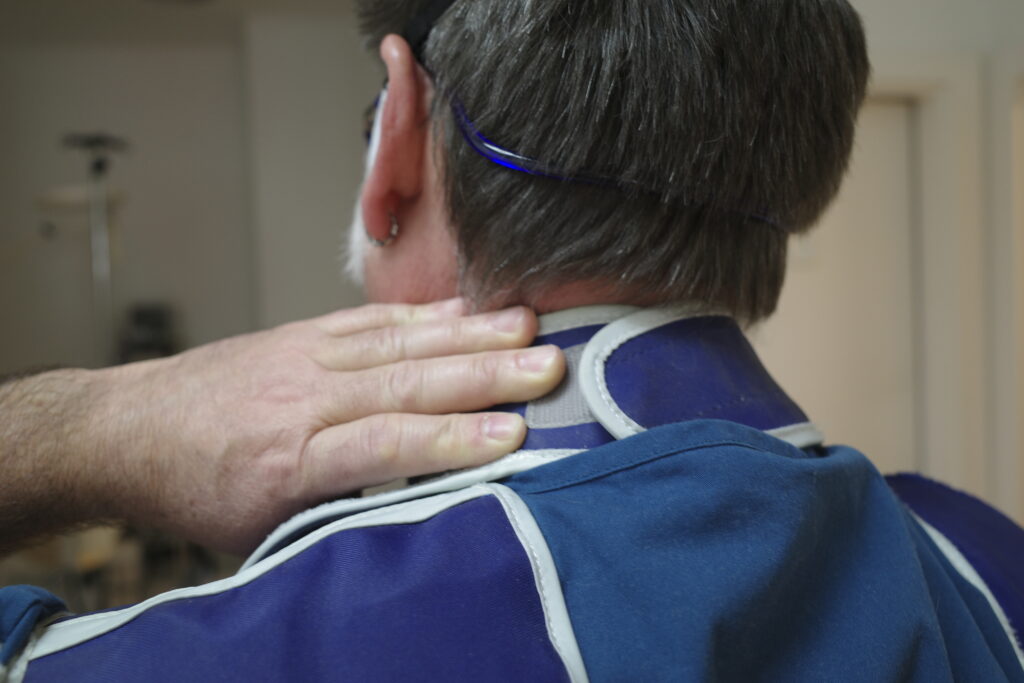
Rear-end collisions cause the majority of whiplash injuries we see, particularly at busy Chicago intersections like North Michigan Avenue and East Chicago Avenue, or during rush hour traffic on the Dan Ryan Expressway.
Side-impact crashes, often called T-bone accidents, frequently occur when drivers run red lights or fail to yield at intersections throughout Chicago neighborhoods. These collisions can cause severe whiplash as the victim’s head snaps sideways upon impact.
Multi-vehicle pileups during Chicago’s harsh winter weather often result in complex whiplash cases involving multiple insurance companies. We coordinate with various insurers while you focus on medical treatment and recovery.
Hit-and-run accidents present unique challenges for whiplash victims. When the at-fault driver flees the scene, we help clients access uninsured motorist coverage and explore other compensation options.
Low-speed accidents in parking lots and residential areas can still cause significant whiplash injuries. Insurance companies often dispute these claims, arguing that minimal property damage means minimal injury. Our legal team works with medical professionals to prove the connection between your accident and ongoing symptoms.
Building a strong whiplash case requires immediate documentation of the accident scene, your injuries, and the impact on your daily life. We begin by gathering police reports, witness statements, and photographic evidence from your collision.
Medical documentation forms the foundation of every whiplash case. We help clients establish treatment relationships with chiropractors, physical therapists, and orthopedic professionals who understand how to document neck injuries for legal purposes properly.
Our team works with accident reconstruction professionals when necessary to demonstrate how the collision dynamics caused your whiplash injury. This becomes particularly important in cases involving disputed fault or low-impact crashes.
We collect employment records, wage statements, and documentation of missed work days to calculate your lost income. Many whiplash victims don’t realize they can recover compensation for reduced earning capacity if their injury affects their ability to perform job duties.
Personal journals documenting your pain levels, sleep disruption, and activity limitations provide robust evidence of how whiplash affects your quality of life. We guide clients through this documentation process from day one.
Ready to learn more? Let’s talk. We’ll review your case and explain your options—no pressure.
Most whiplash injury cases begin with an insurance claim against the at-fault driver’s liability coverage. Illinois requires minimum liability insurance, but these limits often prove inadequate for severe whiplash cases requiring months of treatment.
We handle all communication with insurance adjusters from the start of your case. Insurance companies often contact accident victims within hours, hoping to secure quick settlement agreements before the full extent of injuries becomes apparent.
The discovery phase allows us to gather additional evidence, including the other driver’s phone records, employment history, and prior traffic violations. This information can reveal whether distracted driving, fatigue, or other factors contributed to your accident.
Settlement negotiations typically occur after you complete medical treatment or reach maximum medical improvement. We present complete demand packages documenting your medical expenses, lost wages, and pain and suffering damages.
When insurance companies refuse fair settlement offers, we file lawsuits in Cook County Circuit Court. Most cases settle before trial, but our litigation experience ensures insurance companies take our demands seriously during negotiations.
Contemporary medical records proving you sought treatment immediately after your accident counter insurance arguments that your injuries resulted from pre-existing conditions or unrelated incidents.
Diagnostic imaging, like X-rays, CT scans, or MRIs, can reveal structural damage accompanying your whiplash injury. While soft-tissue damage doesn’t always show up on imaging, these tests rule out more serious injuries and provide a complete picture.
Photographs of vehicle damage help establish the force of impact in your collision. Even minor property damage can cause significant whiplash when the effect occurs at specific angles or catches occupants off guard.
Witness statements from other drivers, passengers, or bystanders provide independent verification of how your accident occurred. Chicago’s busy streets often provide multiple witnesses to traffic collisions.
Employment records documenting your physical job requirements help establish how whiplash symptoms affect your ability to work. Office workers may struggle with computer use due to neck pain, while manual laborers might face more significant work restrictions.
Insurance adjusters receive specific training to minimize whiplash settlements because these injuries are difficult to measure and document using standard diagnostic tests objectively.
Adjusters often argue that whiplash symptoms should resolve within weeks, ignoring medical evidence that some victims experience chronic pain lasting months or years after their accidents. They may also attribute ongoing symptoms to age, prior injuries, or lifestyle factors.
Quick settlement offers made immediately after accidents rarely cover the full cost of whiplash treatment. Physical therapy, chiropractic care, and pain management can continue for months, with costs accumulating well beyond initial emergency room visits.
Insurance companies frequently request independent medical examinations by doctors they select and pay. These examinations often minimize injury severity or suggest that ongoing symptoms are unrelated to the accident.
Understanding these tactics allows us to build stronger cases that address insurance company arguments before they arise. We work with medical professionals who can articulate the long-term implications of whiplash injuries in a way that insurance companies must respect.
For complete legal guidance, contact us to discuss your specific situation and learn about your compensation options.
How long do I have to file a whiplash injury claim in Illinois?
Illinois law provides a two-year statute of limitations for personal injury claims, including whiplash cases. However, you should contact an attorney immediately after your accident to preserve evidence and protect your rights during insurance negotiations.
What if my whiplash symptoms didn’t appear until days after the accident?
Delayed onset of whiplash symptoms is medically typical and legally recognized. The adrenaline and shock of an accident can mask pain that may not become apparent for 24-72 hours. Seeking prompt medical attention when symptoms appear strengthens your case.
How much compensation can I recover for a whiplash injury?
Whiplash settlements vary significantly based on injury severity, treatment duration, lost wages, and impact on daily activities. Minor cases might settle for thousands of dollars, while severe cases requiring extensive treatment can result in settlements exceeding $50,000.
Do I need to go to the emergency room for whiplash?
While not always medically necessary, emergency room visits create important documentation linking your symptoms to the accident. If you experience severe pain, numbness, or headaches after a collision, seek immediate medical attention.
What if the insurance company says my car damage was too minor to cause whiplash?
Low-impact crashes can absolutely cause whiplash injuries. Vehicle damage doesn’t directly correlate with occupant injuries, especially when passengers are unprepared for impact or struck from certain angles. Medical evidence trumps property damage arguments.
Should I give a recorded statement to the insurance company?
Never provide recorded statements to insurance companies without legal representation. Adjusters use these statements to minimize claims by taking comments out of context or highlighting inconsistencies in your recollection of events.
Can I handle a whiplash claim without an attorney?
While legally possible, insurance companies consistently offer lower settlements to unrepresented claimants. Attorney representation typically results in significantly higher recovery amounts that exceed legal fees, even after costs.
What if the other driver doesn’t have insurance?
Illinois requires minimum liability insurance, but some drivers operate vehicles illegally without coverage. Uninsured motorist coverage through your own policy may provide compensation, and we can explore other recovery options based on your specific situation.
How long does treatment typically last for whiplash injuries?
Treatment duration varies greatly depending on injury severity and individual healing factors. Mild whiplash may resolve in weeks with conservative treatment, while severe cases can require months of physical therapy, chiropractic care, and pain management.
Book your free consultation today. You’ll get straight answers about your whiplash claim and a realistic assessment of your case value.